
Blog Posts
f2
03 Dec, 2025
Second Artcile
Deep Space Discoveries
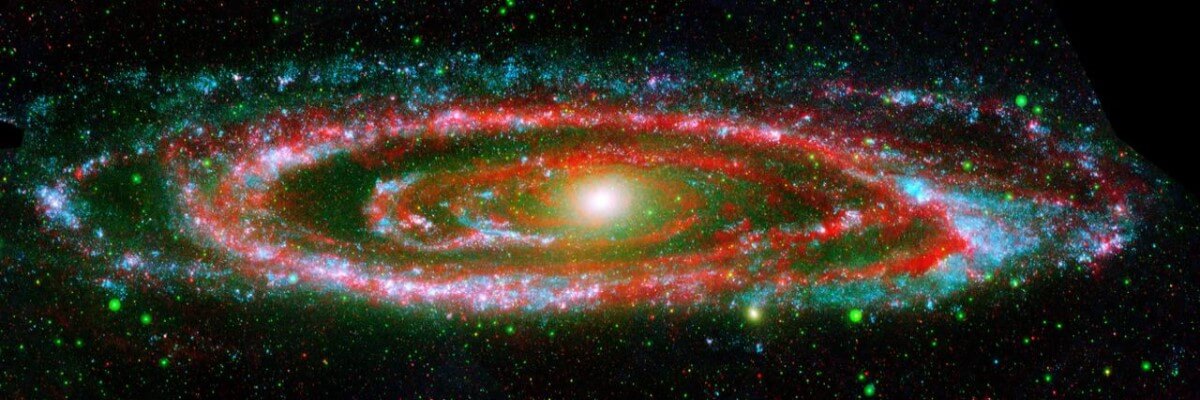
Explore the mysteries of galaxies, nebulae, and black holes far beyond our solar system.
Solar System
Learn about the planets, moons, and other celestial objects in our solar system.
Galactic Phenomena
From supernovae to pulsars, the universe is full of fascinating events. Discover how astronomers study these cosmic wonders.
f2
08 Dec, 2025
Fifth artcile
Deep Space Discoveries
Explore the mysteries of galaxies, nebulae, and black holes far beyond our solar system. These cosmic phenomena are not just beautiful but hold the key to understanding the universe.

Solar System
The solar system consists of the Sun and everything bound to it by gravity, including the eight planets, their moons, and other objects.
| Planet | Orbit Period (Earth Years) | Diameter (km) |
|---|---|---|
| Mercury | 0.24 | 4,879 |
| Venus | 0.615 | 12,104 |
| Earth | 1.00 | 12,742 |
| Mars | 1.88 | 6,779 |
Note: Planets are categorized into terrestrial planets and gas giants.
Galactic Phenomena
From supernovae to pulsars, the universe is full of fascinating events. Discover how astronomers study these cosmic wonders.
- Supernovae: The explosive death of a star.
- Pulsars: Highly magnetized, rotating neutron stars.
- Black Holes: Regions of spacetime exhibiting extremely strong gravitational effects.
Future Exploration
In the coming decades, we will send more probes and telescopes to study the farthest reaches of space. What might we discover next? Here are some upcoming missions:
- James Webb Space Telescope – To study the early universe.
- NASA's Artemis Program – To return humans to the Moon.
- Mars Sample Return Mission – Bringing Martian soil back to Earth.
Test All HTML Tags
- Bold text example.
- Italic text example.
- Underlined text example.
Strikethroughtext example.
"To confine our attention to terrestrial matters would be to limit the human spirit." – Stephen Hawking
- Black Hole
- A region of space where gravity is so strong that nothing, not even light, can escape.
- Pulsar
- A rotating neutron star that emits beams of radiation.
This is small text, often used for copyright or disclaimers.
Water is H2O, and Einstein’s famous equation is E = mc2.
This is strong text used for emphasis!
| tab1 | tab2 | tab3 |
| tab4 | tab5 | tab6 |
| tab7 | tab8 | tab9 |